Daily Bubble
Big CakePuzzle
4.94.63K Reviews
- Version
- 1.0.72
- Installs
- 10.00M
- Age Rating
- Everyone
Screenshots
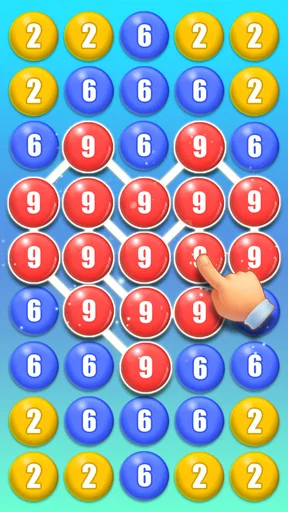
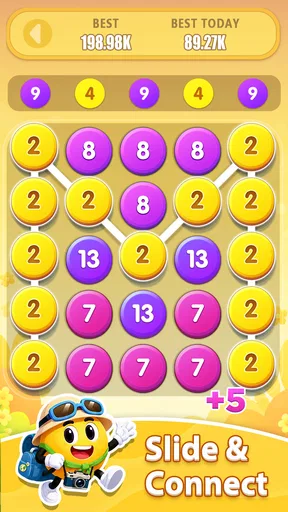
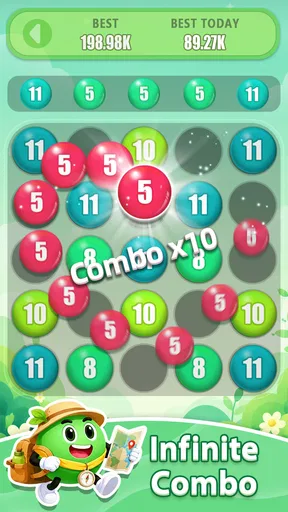
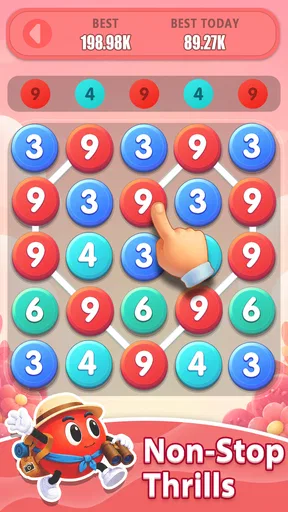
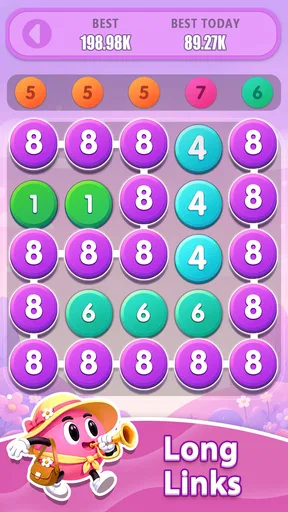

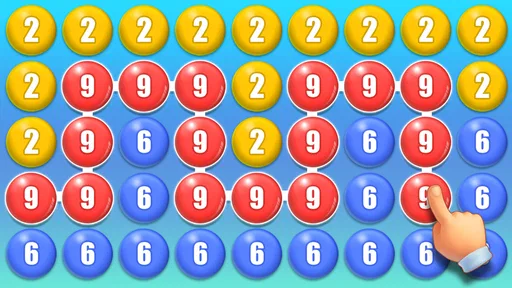
Our Review of Daily Bubble
 Analysis by Appyee
Daily Bubble is the kind of puzzle game I open when I want something immediately understandable, visually cheerful, and easy to leave after a few minutes. Developed by Big Cake, it focuses on merging bubbles rather than building a large story or demanding a long tutorial. That simplicity is its strongest first impression: I can begin playing almost at once, understand the central idea through the board itself, and settle into a light rhythm without preparing for a complicated session.
It is a free game for Android, listed for Everyone, and its broad reach makes sense. The game has passed over ten million installs and holds a 4.9 average from around 68 thousand ratings, which suggests that its straightforward approach connects with a large audience. I would not treat popularity as proof that every player will enjoy it, but it does reflect how accessible the basic experience feels.
What kept me playing was not a dramatic campaign or an elaborate collection system. It was the small satisfaction of spotting a useful merge, clearing visual clutter, and deciding whether to make a safe move now or wait for a better arrangement. That makes Daily Bubble a good companion for short breaks, although players looking for deep strategy, a strong narrative, or a constantly changing challenge may find it too gentle.
How Daily Bubble Builds Its Playable Mood
I find the game’s appeal comes from how its bubble-merge idea, gentle visuals, and unhurried pace reinforce one another. In this section, I’ll look at why that consistency makes short sessions feel approachable, while also noting the small planning habits that keep the puzzle from becoming pure tapping.
A bright first impression with very little resistance
The opening experience is deliberately friendly. The bubble-focused presentation tells me what kind of game this is before I have to read much, and the clean visual language keeps attention on the board. I never feel that the interface is competing with the puzzle. For a casual game, that matters: a player who opens it while waiting for a bus or taking a short break wants to understand the next action quickly, not study several menus.
The game’s most convincing quality is its low entry barrier. I can play with one hand, make progress in a short sitting, and stop without feeling that I have abandoned a complicated objective. That makes it especially suitable for people who enjoy matching and merging puzzles but do not want the pressure of real-time competition. It also works for younger players within the Everyone age rating, provided the person using the device is comfortable with the game’s optional purchase model.
There is a trade-off behind that accessibility. Because the basic interaction is so easy to grasp, the early sense of discovery can fade if I am expecting a large set of new rules. Daily Bubble is better understood as a relaxing repeatable puzzle than as a game that constantly reinvents itself. I recommend it to someone who values a dependable mood over surprise; I would point a more ambitious puzzle fan toward a title with layered objectives and more demanding planning.
The bubble world communicates through shape and color
Daily Bubble does not need a detailed fictional setting to create an identity. Its world is expressed through rounded forms, bright bubble colors, and the visual pleasure of pieces coming together. This gives the game a soft, playful character rather than a tense or competitive one. The art direction supports the main action because the objects I am manipulating also provide the visual reward.
That consistency is important. In some puzzle games, decorative effects make the board harder to read, especially when several items have similar colors or when animations linger over the next decision. Here, the bubble theme naturally belongs to the mechanic. A merge looks like a continuation of the same visual idea instead of a separate reward pasted onto the board. I find that helps me read the state of play without breaking the relaxed atmosphere.
The visual style also affects how I approach mistakes. A dark, urgent presentation can make a failed move feel like a setback. Daily Bubble’s softer look makes experimentation less intimidating. I am more willing to test a move, observe how the board changes, and adjust my plan. That does not turn the puzzle into a deep strategy game, but it makes the learning curve feel comfortable.
One useful habit is to pause for a second before making a move, not because the game demands intense calculation, but because the attractive colors can encourage impulsive tapping. I get better results when I scan the whole board, identify which bubbles are blocking useful spaces, and then choose the merge that leaves the clearest follow-up. This is a small distinction, but it turns the experience from random tapping into light planning.
Sound and pacing keep the game from feeling hurried
The audio and animation work best when they remain in the background. Daily Bubble’s mood depends on a gentle sequence: look at the arrangement, make a move, watch the bubbles combine, and reassess. That rhythm gives each action a little weight without making the game feel slow. I can enjoy the visual response of a successful merge while still returning my attention to the next decision.
This pacing makes the game a natural fit for everyday downtime. I can play during a short coffee break, while waiting for an appointment, or after finishing a task when I want a mental reset. The experience does not ask me to remember a complicated plot or maintain a long chain of timed actions. If I need to put the phone away, the session feels easy to interrupt.
The same calm tempo may disappoint players who want constant excitement. There is no reason to choose Daily Bubble for adrenaline, rapid competition, or an intense score chase. Its appeal is closer to a quiet tabletop puzzle than an action game. I see that as a deliberate strength, but only for the right audience.
I also prefer playing it when I want a screen activity that does not dominate the room. The visual effects provide enough feedback to make a move satisfying, while the overall presentation supports a lower-pressure session. For people who usually abandon puzzle games because they feel noisy or frantic, this restrained mood could be the deciding factor.
Simple merging still rewards careful board management
The central mechanic is easy to understand, but the better way to play is not simply to merge the first available bubbles. I try to preserve open space and avoid creating a crowded corner that limits later options. A move that produces an immediate result may be weaker than one that keeps several future combinations possible. That is the main strategic trade-off I notice: short-term satisfaction versus a healthier board.
Another useful approach is to treat the board as a sequence of opportunities rather than a collection of isolated pieces. Before tapping, I look for merges that connect with the surrounding arrangement and consider where the resulting bubble will leave room. This is especially helpful when several possible moves look equally attractive. The best choice is often the one that improves the next two or three decisions, not the one with the flashiest immediate outcome.
That light planning is where the game separates itself from a purely automatic time filler. It remains approachable, but it gives me a reason to slow down. At the same time, the mechanic does not become so demanding that a casual player needs a notebook or a long uninterrupted session. Daily Bubble finds a comfortable middle ground between idle tapping and serious puzzle analysis.
Players should also understand what it is not. It is not a replacement for a traditional logic puzzle with complex deduction, nor does it offer the same kind of narrative motivation as a story-led mobile game. The satisfaction comes from arranging and merging bubbles, managing space, and keeping a smooth flow. If that loop sounds repetitive rather than soothing, the game will probably not change your mind.
Where the free model fits into the experience
Daily Bubble is free to download and use, with in-app purchases ranging from $1.99 to $59.99 per item. I would approach that model with the same practical caution I use for any free mobile puzzle: enjoy the core loop first, then decide whether optional spending genuinely improves your experience. The game works best when I treat purchases as a choice rather than part of the reason to start playing.
For families, the Everyone rating makes the game broadly approachable, but the purchase range is still worth keeping in mind on a shared device. A parent or guardian may want to review the device’s purchase controls before handing the phone to a child. That is not a criticism of the bubble mechanic; it is simply sensible housekeeping for a free game that includes paid items.
The advantage of this structure is that a curious player can try the experience without paying upfront. The disadvantage is that the surrounding purchase options may be a distraction for someone who wants a completely self-contained premium puzzle. If I wanted a one-time purchase with no free-to-play context, I would choose a different category of mobile puzzle instead.
Who should install it, and who should skip it
I would recommend Daily Bubble to players who enjoy colorful merging, short sessions, and a calm visual atmosphere. It suits someone who wants a simple routine after work, a low-pressure distraction during travel, or a puzzle that can be played in small pieces throughout the day. It is also a reasonable introduction for a person who normally finds mobile puzzle interfaces intimidating.
I would be more hesitant to recommend it to players who need a strong sense of progression, detailed world-building, or demanding tactical variety. Someone who enjoys hard logic problems may quickly notice that the game’s appeal comes from repetition and refinement rather than increasingly complex rules. Likewise, competitive players who want leaderboards, direct opponents, or fast reactions should look elsewhere.
Compared with match-three games, Daily Bubble feels less focused on chaining several quick combinations and more focused on the gradual satisfaction of merging related pieces. Compared with physics-based bubble shooters, it places less emphasis on aiming and immediate trajectory decisions. Compared with idle games, it asks me to make meaningful board choices instead of merely waiting for numbers to rise. Those differences make it a better fit for players who want gentle interaction without abandoning decision-making.
Practical details before making it a regular game
The current version is 1.0.72, and it requires Android 6.0 or later. That compatibility makes it accessible on many older Android devices, although the real experience will still depend on the phone’s performance and available storage. I would install it on a secondary or older device without expecting the same level of visual polish as on a newer screen, but the simple presentation is naturally suited to casual hardware.
Its release date was September 28, 2022, which places it in the established part of the mobile puzzle market rather than as a brand-new experiment. That is useful context for my expectations: I approach it as a polished, familiar-style casual game, not as a bold reinvention of merging puzzles. Big Cake’s choice to keep the concept direct is also why the game is easy to recommend selectively.
In an everyday scenario, I might open it while waiting for a delayed train. I can make a few thoughtful moves, stop when the announcement arrives, and return later without needing to reconstruct a story or remember a complicated control scheme. If I have more time, I can continue refining the board and aim for cleaner decisions. That flexibility is one of its most practical strengths.
My final view of the atmosphere and the loop
Daily Bubble succeeds because its art direction, sound, and pacing all point toward the same goal: a soft, readable, unhurried puzzle session. The bubble theme is not just decoration; it makes the merges feel natural and gives the board a coherent personality. The rhythm leaves room for thought, while the simple controls make the game approachable during brief breaks.
My main reservation is that the same consistency can become predictability. After the initial charm settles, the game depends on whether you enjoy repeating the merge-and-plan cycle. It does not offer enough complexity for every puzzle enthusiast, and its free structure with optional purchases may not suit people who prefer a paid, distraction-free experience.
Still, I think the balance is successful for casual players. The game has earned a 4.6 average from around 4.6 thousand written reviews, and that broad response matches my impression that its core audience values ease, color, and a relaxing pace. The best reason to play is not difficulty; it is the satisfying calm of making one good merge after another.
If you want a friendly puzzle for short, interruptible sessions, I would gladly suggest Daily Bubble. If you want a demanding logic challenge, a rich setting, or competitive pressure, choose a more specialized alternative. For everyone in between, this is a pleasant free game from Big Cake that understands its mood and mostly stays faithful to it.
Verdict
Strengths of Daily Bubble
- Simple daily format makes it easy to build a consistent puzzle habit.
- Short rounds are convenient for quick play during breaks or commutes.
- Clean visuals keep the board easy to read on smaller phone screens.
- Gradual challenge can appeal to both casual and experienced puzzle players.
- Daily puzzles provide a shared topic for comparing results with friends.
Limitations of Daily Bubble
- Missing a day may reduce the appeal for players who prefer continuous progression.
- Some puzzles can feel repetitive after extended play sessions.
- The daily format offers less content than a large level-based puzzle game.
- A mistake or poor result may be frustrating when only one puzzle is available.
- Performance and ad frequency may vary depending on the device and app version.
Other Releases by Big Cake
View All


Similar Picks in This Category
View All
Block Blast!
HungryStudio4.8

Braindom: Brain Games Test
Lahana Game Studio4.6

AMAZE!
CrazyLabs LTD4.6

Sudoku - Classic Sudoku Puzzle
Oakever Games4.7

Art Puzzle - Puzzle Games
Easybrain4.8

Amaze GO!
Oakever Games4.9
Frequently Asked Questions
What is Daily Bubble and how does it work?
Daily Bubble is a casual bubble-shooting puzzle game designed for short, relaxing play sessions. You aim and launch colored bubbles to match groups of the same color, clear them from the board, and complete each level’s objective. As you progress, layouts generally become more challenging, requiring careful shots, bank shots, and better planning rather than simply tapping as quickly as possible.
Is Daily Bubble free to download and play?
Daily Bubble can generally be downloaded and played without an upfront purchase, making it easy to try on a compatible Android or iOS device. However, free games may include advertising, optional in-app purchases, or both. These purchases can sometimes provide extra boosters, lives, or other conveniences. Check the store listing and the payment settings on your device before downloading, especially if children may use the app.
Does Daily Bubble require an internet connection?
Daily Bubble may allow users to play at least some levels without a constant internet connection, which is useful during travel or when mobile data is unavailable. Nevertheless, an internet connection may be needed for advertisements, cloud features, updates, leaderboards, or in-app purchases. Offline availability can also vary by version and device, so it is best to test the game after installation rather than assuming every feature works offline.
Is Daily Bubble suitable for children and casual players?
Daily Bubble is easy to understand and uses simple tap-and-aim controls, so it can be suitable for casual players and older children who enjoy colorful puzzle games. The main concerns are advertising, optional purchases, and the age rating shown in the relevant app store. Parents should review those details, enable purchase restrictions where appropriate, and check whether the game’s difficulty and visual style are suitable for the intended player.
What should I check before installing Daily Bubble?
Before installing Daily Bubble, check that your phone or tablet meets the current Android or iOS requirements and has enough free storage for the app and future updates. Review the latest permissions, privacy information, age rating, advertising disclosures, and in-app purchase details. It is also worth reading recent user feedback, because performance, available features, and the amount of advertising can change between updates or differ across devices.
Play our best games!


